The EU Migration and Asylum Pact which will be in effect from June 12, 2026 onwards; is one of the most significant overhauls of European migration policy in decades.
After years of negotiation, the Pact is now moving from political agreement into practical application across the European Union. Its goal is to create a more unified system for managing asylum claims, border arrivals, irregular migration and responsibility-sharing between EU member states.
Supporters argue that the new framework will make the EU’s asylum system faster, more predictable and more balanced. Critics warn that it may increase detention, speed up rejections, and make it harder for vulnerable people to access protection.
Either way, the Pact marks a major shift in how Europe handles migration pressure at its external borders.
What Is the EU Migration and Asylum Pact?
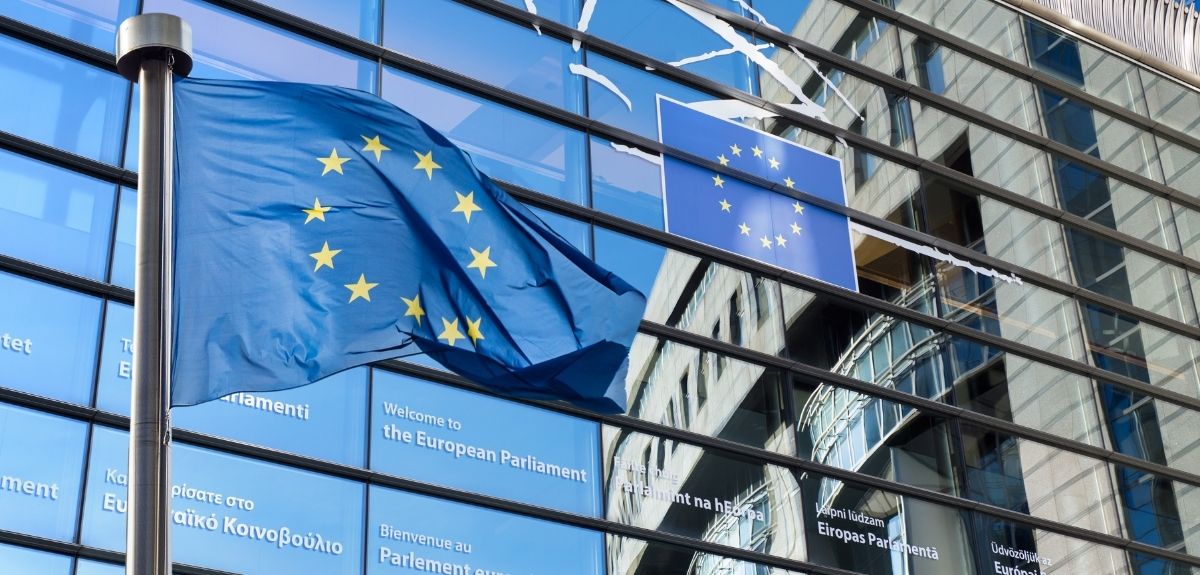 The Pact is not a single law. It is a package of new EU rules covering asylum procedures, border screening, migration management, crisis response, biometric data, return procedures and solidarity between member states.
The basic idea is to reduce the uneven burden on countries at the EU’s external borders, such as Greece, Italy, Spain, Malta and Cyprus, while making the asylum process more structured across the bloc. The Pact also aims to discourage “secondary movements,” where asylum seekers move from the first EU country they enter to another member state before their claim is processed.
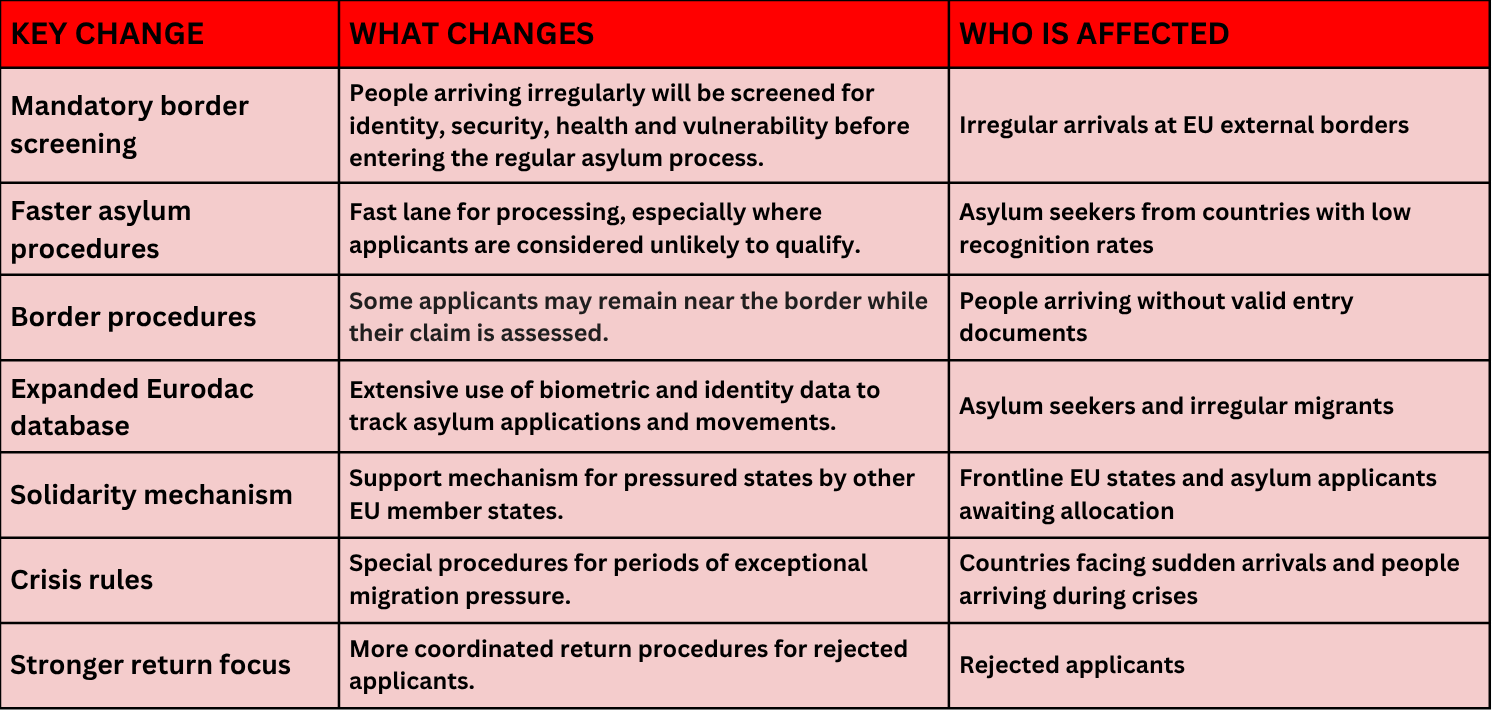
Key Changes and Who They Affect Most
The biggest impact will be felt by asylum seekers, irregular migrants, and EU border countries. People entering the EU through regular visitor, student, work or family routes are less directly affected.
 Why the EU Migration and Asylum Pact Matters
The EU has struggled for years to agree on a common asylum system. The 2015–2016 migration crisis exposed major divisions between countries that receive large numbers of arrivals and countries that resist relocation quotas. The new Pact is designed to prevent the system from breaking under pressure again.
For governments, the Pact promises more control and faster decision-making. For asylum seekers, it could mean quicker outcomes but also more screening, more data collection, and potentially less freedom of movement while a claim is processed.

UK Global Talent Visa: The Strategic Immigration Pathway for Distinguished Professionals. 2026 Guide.
What Changes for Nationals of Canada, China and India?
For most regular travellers, the Pact does not replace Schengen Visa rules. Tourism, short business trips, family visits, study permits and work permits remain governed by separate EU and national immigration rules.
Canadian nationals: Canadians generally remain visa-exempt for short Schengen stays of up to 90 days in any 180-day period. The Pact does not turn Canadian tourists or business visitors into visa-required travellers. However, Canadians are still subject to normal border checks, stay limits, and digital entry-exit controls.
Chinese nationals: Most Chinese ordinary passport holders still require a Schengen visa for short stays. The Pact does not remove that requirement. It mainly affects Chinese nationals if they seek asylum, arrive irregularly, overstay, or fall into a return/removal process.
Indian nationals: Most Indian ordinary passport holders also still require a Schengen visa for short stays. Like Chinese nationals, Indian travellers using regular visa routes are not the main target of the Pact. The impact becomes more relevant in asylum, irregular migration, rejected-claim, or return cases.
In simple terms: for Canadians, Chinese nationals and Indian nationals travelling legally for tourism, business, study or work, the Pact is not the main rulebook. For people seeking asylum or entering irregularly, it becomes highly relevant.
EU Migration and Asylum Pact: Criticism and Concerns
Human-rights groups are concerned that accelerated procedures and border processing may weaken access to fair asylum decisions. There are also concerns about detention-like conditions, treatment of children and vulnerable people, and whether countries will implement safeguards consistently.
Another concern is operational readiness. A system this complex depends on trained staff, functioning databases, available reception capacity, legal assistance, translators and coordination between member states. If those pieces are weak, the Pact could create delays rather than solve them.

Frequently Asked Questions
- Does the EU Migration and Asylum Pact stop asylum claims?
No. People can still seek asylum in the EU, but the process may involve more screening, faster decisions and stricter rules on which country handles the claim.
- Does the Pact affect tourists?
Usually not directly. Tourists are mainly affected by Schengen visa rules, border checks, Entry/Exit System rules and future ETIAS requirements, not asylum procedures.
- Which countries are most affected?
Frontline EU countries such as Greece, Italy, Spain, Malta and Cyprus are likely to feel the biggest operational impact because many irregular arrivals first enter through their borders.
- Will asylum seekers be relocated across Europe?
Some may be, but the solidarity system is flexible. Member states can contribute through relocation, financial support or operational assistance.
- Does this change Schengen visas for Canada, China or India?
No. Canadians generally remain visa-exempt for short stays, while Chinese and Indian ordinary passport holders generally still need Schengen visas.
- Why is the Pact controversial?
Supporters say it brings order and shared responsibility. Critics say it prioritizes deterrence, border control and returns over protection.
EU Migration & Asylum Pact Bottom Line
The EU Migration and Asylum Pact is a major restructuring of EU asylum rules. It aims to create a faster, more coordinated and more enforceable migration system. The people most affected are asylum seekers, irregular migrants, rejected applicants and EU border states. Regular travellers from around the world, especially Canada, China and India should see little direct change from the Pact itself, but they still need to follow Schengen visa, entry and stay rules carefully.